

What Happens If It Rains For Bounce House Rental? Safety, Care & Next Steps
Rain doesn’t have to ruin your bounce house party plans — but it does require fast decisions and the right safety moves. Light drizzle may allow limited use with close supervision, but heavy rain, thunderstorms, or lightning require immediate evacuation and shutdown. This guide explains what to do, how to protect the inflatable, and how to handle rescheduling.
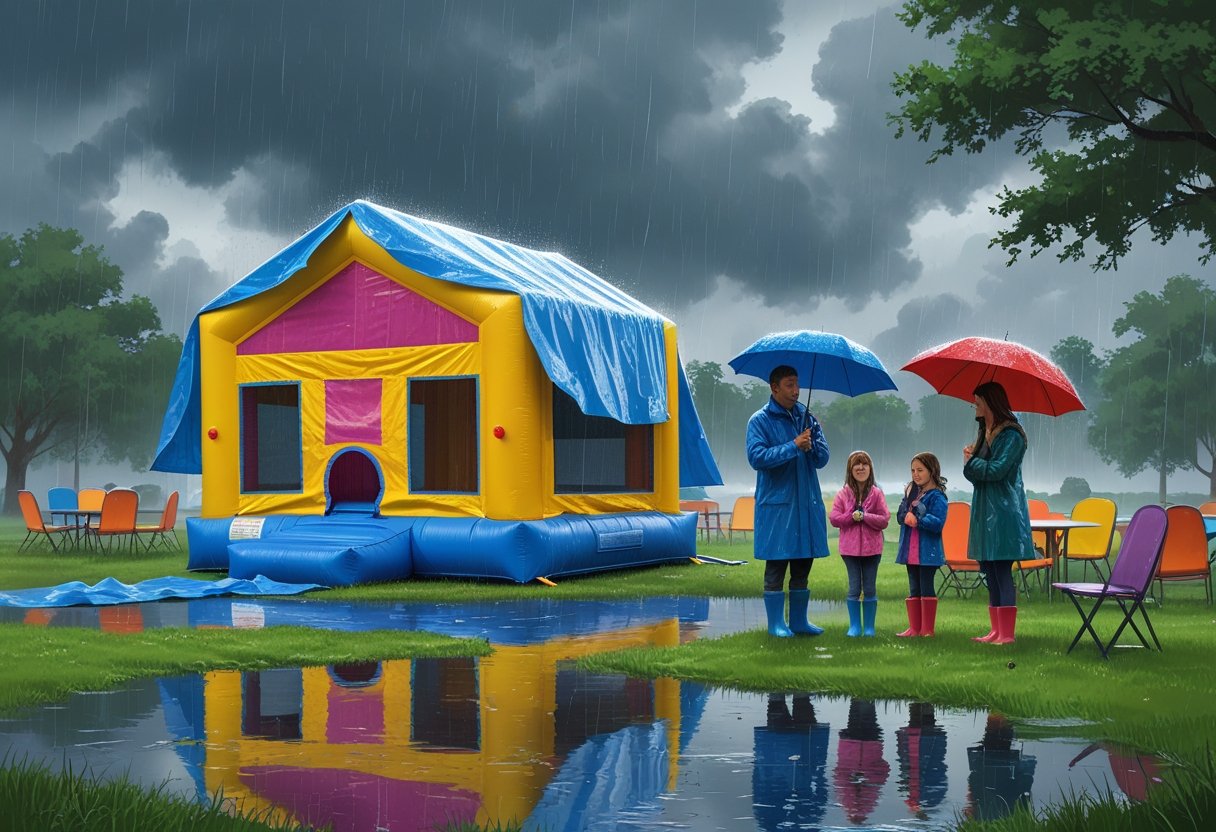
The safety of children and the condition of the bounce house depend on your response to changing weather conditions. Water can create slippery surfaces inside the inflatable, reduce stability, and pose electrical hazards with blower equipment. Many rental companies use weather-resistant materials — but that doesn’t eliminate risk during precipitation.
Your experience (and any reschedule/refund options) also depends on the provider’s weather policy and the severity of the rain. The best move is to know your plan before the party starts: supervision rules, shutdown triggers, and a quick backup activity.
If you hear thunder, see lightning, or wind picks up — shut it down immediately. Safety beats “just five more minutes.”
Key Takeaways
- Light rain may allow limited, supervised use — but heavy rain or storms require immediate shutdown and evacuation.
- Wet conditions create slipping hazards and electrical risks that compromise participant safety.
- Proper drying, inspection, and communication with your rental provider protects the equipment and clarifies your options.
Immediate Effects Of Rain On Bounce House Rentals
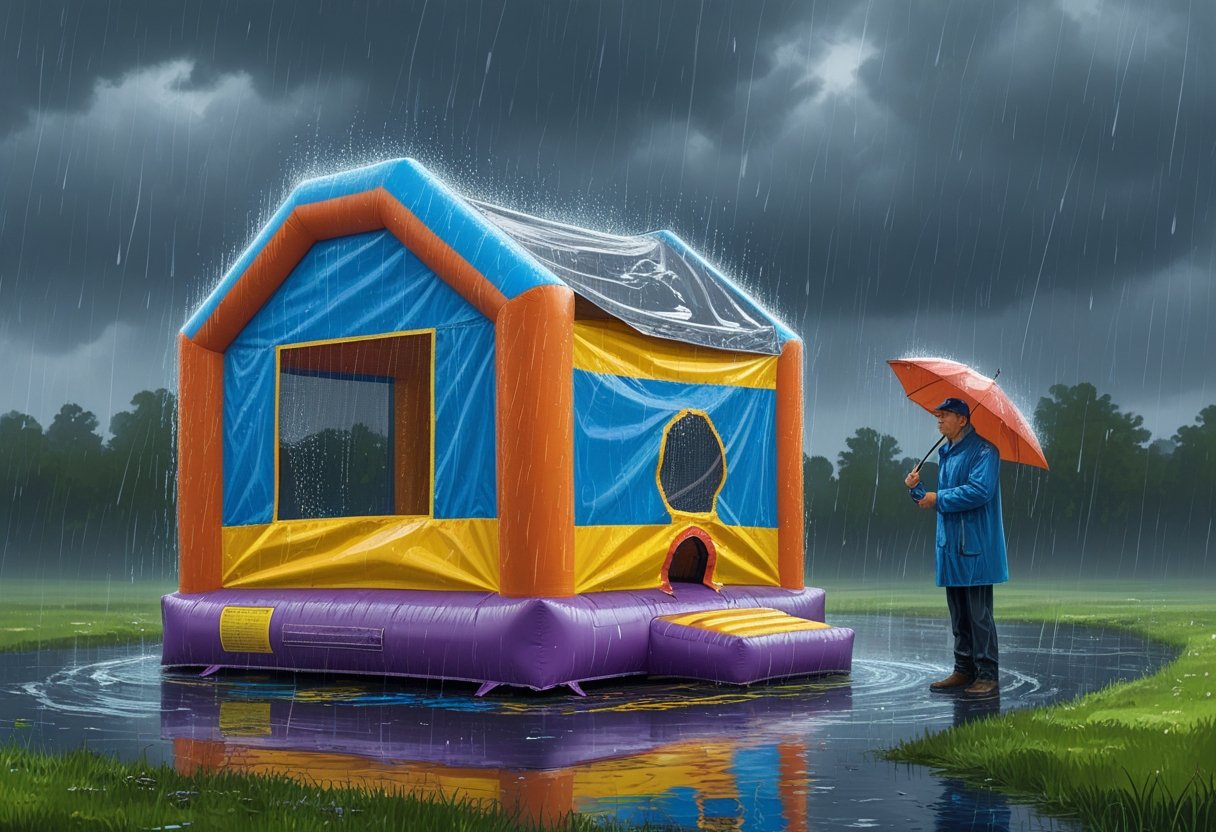
Rain creates instant challenges for your bounce house rental, affecting both safety and functionality. The play surface gets slick, materials trap moisture, and electrical components can become hazardous.
Changes In Bounce And Play Surface
Water creates a film on vinyl/PVC that reduces traction fast. Kids can slip while bouncing, entering/exiting, or simply moving around. Multiple users make it worse because wet feet spread water everywhere.
- Reduced grip makes movements unpredictable
- Water can pool in low spots and seams
- Entry and exit areas become especially dangerous
- Wet clothing/shoes increase sliding risk
Impact On Inflatable Materials
Commercial inflatables are water-resistant, but seams and stress points can trap moisture. Rain adds weight, which stresses seams, anchors, and the inflatable’s overall stability — especially if water pools in sections.
- Seams can absorb water through stitching
- Stress points may weaken when saturated
- Air chambers and corners can trap moisture
Electrical And Blower Hazards
The blower is the biggest risk. Moisture + electricity is a serious hazard. Water can short the blower, trip GFCIs repeatedly, or cause unexpected deflation. Keep blowers and connections dry at all times.
Heavy rain begins, lightning/thunder occurs, or the blower/cords/outlet area is getting wet.
Safety Concerns And Risks During Rainy Conditions
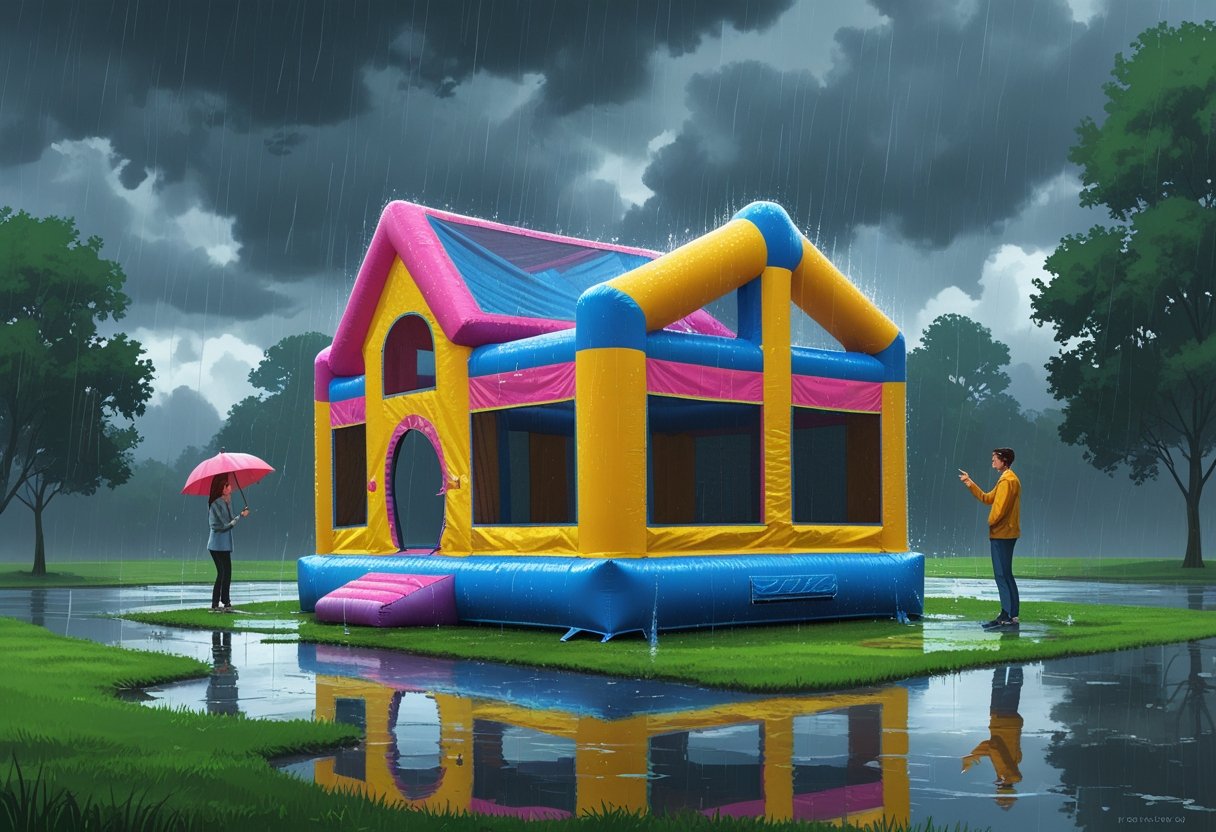
Slip And Fall Risks On Wet Surfaces
Wet vinyl becomes extremely slippery. Falls can turn into collisions with other kids or hard impacts with inflatable walls. The entrance/exit areas are often the worst because they’re flatter and collect water.
If moisture is very light, reduce capacity, enforce no shoes, and wipe surfaces constantly. For moderate/heavy rain, stop play until surfaces are fully dry.
Electrical Shock And Blower Care
Blowers require constant power, so rain exposure can create shock hazards. Keep the blower under a dry cover (not touching vents), use outdoor-rated connections, and avoid cords across puddles.
Wind, Lightning, And Severe Weather Protocols
Rain often comes with wind gusts. Strong winds can lift or tip inflatables even when anchored. If thunder is audible or lightning is visible, evacuate and deflate immediately.
Before kids go in, choose the “shutdown trigger” (thunder, lightning, heavier rain, or noticeable wind). Communicate it to all adults.
Types Of Bounce Houses And Their Rain Compatibility
Standard Bounce Houses Versus Wet Bounce Houses
Standard bounce houses are water-resistant but not designed for rain play. Even a drizzle can make the inside unsafe. Wet-rated inflatables (and wet/dry designs) may have better drainage and traction — but they still must shut down for lightning and high winds.
Wet/Dry Combos, Slides, And Water Activities
Wet/dry combo units are more flexible when weather is unpredictable. If the unit is designed for water use, it will typically include drainage and materials meant for wet conditions. But again: storms and wind still mean shutdown.
Inflatable Obstacle Courses In Rain
Obstacle courses have multiple zones: climbs, tunnels, and connectors that trap moisture. Unless explicitly rated for water use, they become risky quickly and require thorough drying afterward to prevent mold.
Practical Steps If Rain Occurs During Your Rental
Evacuation And Deflation Procedures
Remove all children immediately when rain starts (especially if it’s more than a light sprinkle). Then shut off power and unplug the blower. Let the inflatable deflate safely and keep kids away during deflation.
Protecting Blowers And Electrical Components
Move cords and connections to a dry area. Never handle electrical parts with wet hands or while standing in water. If anything gets wet, don’t plug it back in until it’s completely dry and looks safe.
Temporary Shelters And Indoor Moves
If you have the space (and ceiling clearance), an indoor move can save the party. Otherwise, a tight, well-secured cover can help — but it must not blow onto the unit or block blower airflow.
Have an indoor “party pivot” ready (games, pizza, movie, crafts) so you can shut the inflatable down without stress.
After The Rain: Cleaning, Drying, And Damage Prevention
Thorough Drying Techniques
Drying is everything. Wipe down water, remove puddles inside, then inflate and air-dry in ventilation (and sun if possible). Fans help a lot. Seams and corners trap moisture, so check them carefully.
Mold And Mildew Protection
Mold and mildew can develop quickly if an inflatable is stored damp. Only store once fully dry. A mild soap/water wipe-down after rain is smart, especially if the unit was muddy.
Inspection And Post-Rain Cleanup
Inspect seams, anchor points, and high-stress areas. Remove debris and confirm everything inflates properly with no sagging or leaks. If you notice damage, document it and contact your rental provider right away.
Bounce House Rental Policies And Customer Options
Rescheduling And Refund Approaches
Most rental providers have a weather policy that explains cancellation deadlines, rescheduling credits, and what happens if rain begins after setup. Your best move is to read it before booking and keep communication in writing (text/email) if weather turns.
- Some companies offer rescheduling credit if you notify them early
- Some allow same-day changes if severe weather hits unexpectedly
- Many policies change once equipment is delivered and set up
Communication With Your Provider
If rain is in the forecast, reach out early. Ask about cutoff times, what weather triggers a shutdown, and whether a credit applies. Clear communication saves headaches for everyone.
Keep screenshots of the forecast near your event time and save all messages with the rental provider.
Need Help Picking the Right Rental for Unpredictable Weather?
Browse inflatables, combos, and party rentals on Jump Start Party NC — and build a plan that’s fun even if the forecast changes.
FAQ
Can kids use a bounce house in light rain?
In some cases a very light drizzle may be manageable with strict supervision, reduced capacity, and constant wiping — but the surface becomes slick fast. If rain increases, shut it down immediately.
What if it starts raining after the bounce house is already set up?
Evacuate first, then shut off power and unplug the blower. Protect electrical components and wait for safe conditions. Contact your provider right away to discuss next steps (pause, reschedule, or credit).
Is lightning an automatic shutdown?
Yes. If you see lightning or hear thunder, evacuate and deflate immediately. Do not touch electrical equipment until the storm passes.
How do you prevent mold after rain?
Dry completely before storage. Air-dry with fans and sunlight when possible, and double-check seams/corners for trapped moisture.